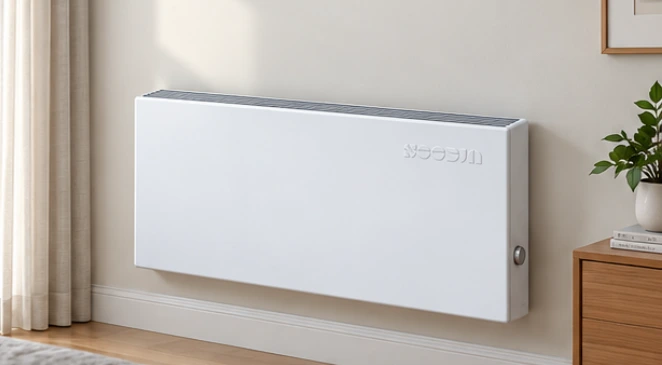
Wall-Mounted Hydronic Convectors
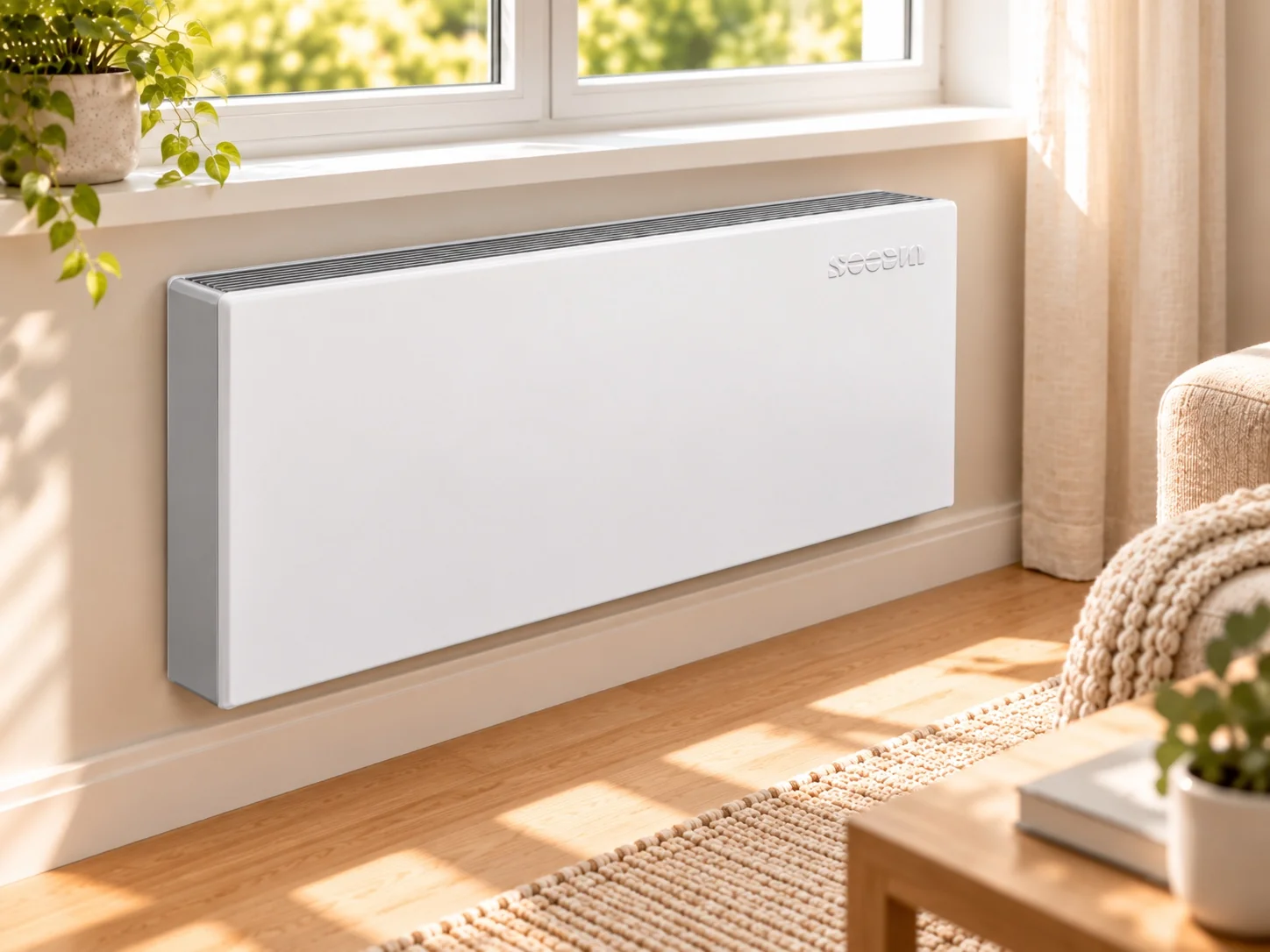
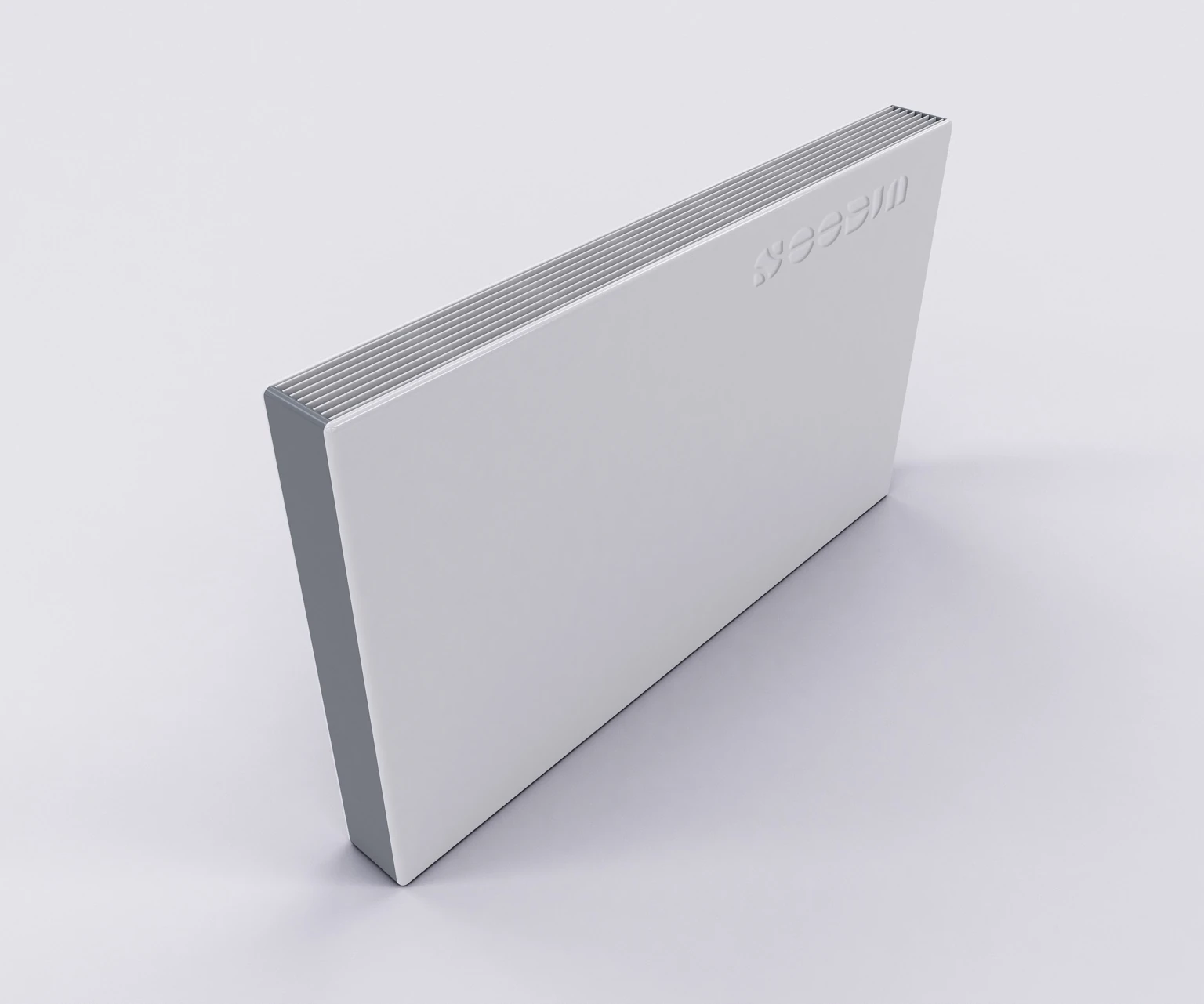
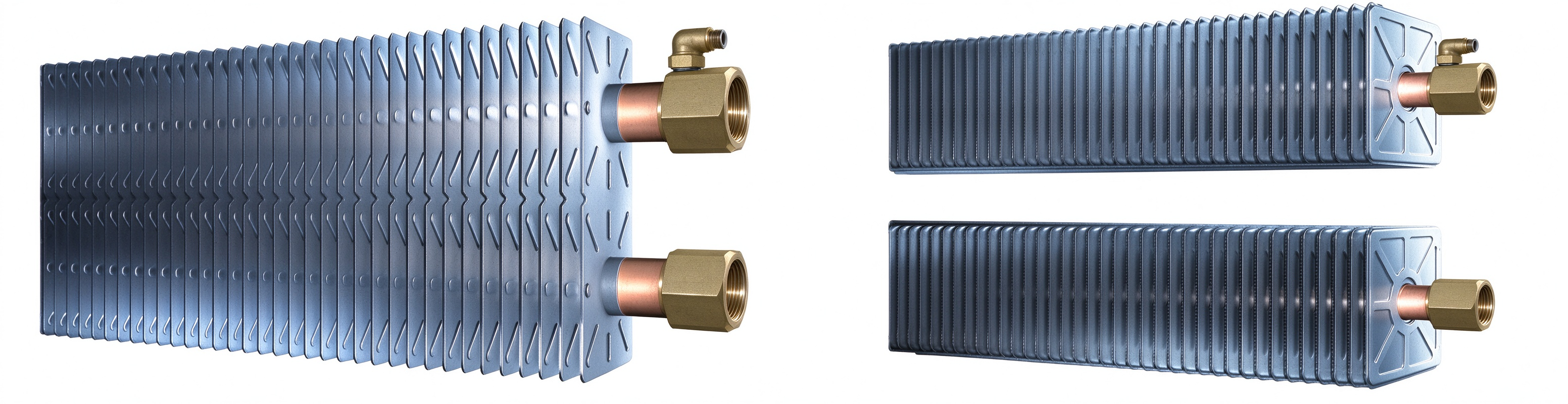
SOODIA Wall-Mounted Hydronic Convectors combine a copper-tube, aluminium-fin heat exchanger with a slim decorative enclosure mounted on the wall. They provide water-based heating by natural convection without a fan. The family is presented for residential, commercial and public interiors, including schools and healthcare facilities. Under-window installations are shown on the school application page, offering a starting point for coordinating the unit with the available wall area, sill and heating pipework.
Choose this mounting format when the design provides a suitable wall position rather than a trench in the floor or a freestanding appliance on supports. It differs from perimeter convectors coordinated within a window-sill or curtain-wall enclosure: the wall-mounted unit has its own visible casing. Standard models cover a range of lengths, heights and depths, while custom dimensions, colours and connection arrangements can be discussed for new-build or refurbishment work. Select using both the room's heating requirement and the available wall space. The model schedule below provides documented examples, but it is not a substitute for checking the installation drawing and design water temperatures for the intended room.
Key Advantages
Slim Architectural Design
A compact, wall-mounted profile that integrates into different interior styles.
Even Heat Distribution
Convection heating helps distribute warmth evenly throughout the room.
Low Surface Temperature
Suitable for public interiors, schools and healthcare facilities.
Lightweight & Easy Installation
A compact structure and low water content simplify handling and installation.
Durable & Low Maintenance
Copper tubes and aluminium fins provide corrosion resistance and long service life.
Flexible Dimensions
Various lengths, heights and depths, with custom sizes available to suit project requirements.
OEM / Private Label Options
Customizable colours, dimensions, logos and packaging for different markets.
Heat Exchanger
TECHNICAL DATA PDF
Dimensions, drawings & performance.
soodiahvac Wall-Mounted Hydronic Convector · PDF · 0.7 MB
APPLICATIONS
Wall-mounted heating for schools
Wall-Mounted Hydronic Convectors suit school, kindergarten and other public interiors where a wall-mounted unit fits the room layout. A casing surrounds the copper-tube and aluminium-fin heat exchanger, helping reduce direct contact with it. The school solution shows under-window installation examples.
How it works
Hot water flows through the copper tubes, transferring heat to the aluminium fins and then to the air around them. As that air warms, it rises through the enclosure's upper outlet and supports circulation within the room. The published wall-mounted range uses natural convection without a fan; it should not be described as Fan-Assisted Heating. Forced convection is the technical term for a different airflow method in which a fan drives air through the exchanger.
Output changes with the operating water and room temperatures. The technical PDF gives several temperature columns for each size, so use the column that matches the design rather than quoting the largest number in the row. A casing separates the exchanger from direct contact, but that construction alone does not establish a certified surface-temperature limit. Any project requiring a specific touch-temperature criterion needs confirmation for the intended operating conditions.
Selection table
Wall-mounted technical PDF, page 2. Overall lengths and heights are reproduced directly from its dimension table; both examples have a depth of 130 mm. Outputs below use 80/60/18°C (supply/return/room). The publication does not identify the connection thread for these rows, so that detail remains to be confirmed.
| Model | Length (mm) | Body height (mm) | Heat output (W) |
|---|---|---|---|
| S4TDD-600-130-1000/S15-1.0-DXQ | 1000 | 600 | 1561 |
| S4TDD-470-130-1000/S15-1.0-DXQ | 1000 | 470 | 1436 |
Installation
Measure the available wall length, height and projection into the room, then compare them with the selected model's overall dimensions. In an under-window position, include the sill and the air outlet in the section drawing. A wall-mounted convector does not require a floor trench, so the relevant coordination is the mounting surface, fixing arrangement, pipe route and clearance around the enclosure rather than an assumed recessed depth. Have the installer verify the mounting detail against the actual wall construction.
Keep the top outlet and air entry path clear when coordinating curtains, desks, cupboards or other furniture. Use the product drawing for the proposed connection locations, and retain access for valves and maintenance. For refurbishment, show the existing pipe positions before requesting a different connection arrangement. The school examples illustrate the positioning concept, not universal fixing distances or a guaranteed safety clearance. Record the final unit dimensions and connection detail in the project drawing before installation, particularly when replacing an existing heater whose mounting points and pipe centres may differ.
Materials and finishes
Copper tubes and aluminium fins are the documented heat-exchanger materials for this family. The slim enclosure and upper grille provide the visible architectural finish around that exchanger. Custom colours, dimensions, connection arrangements and private-label options are described on the existing product page; exact finish references and the construction of the selected casing should be agreed for the order. Avoid treating a photograph as confirmation of a metal grade or coating specification. For a school or other public interior, include the required appearance and any project-specific cleaning or surface criteria with the enquiry so they can be reviewed alongside the model and operating temperatures.
Project documents
Submit the room heat load, supply and return water temperatures, room temperature, quantity and a drawing of the available wall space. Include the sill level, existing or proposed pipes, and whether standard or custom dimensions are needed. The Technical Data PDF on this page contains model dimensions, installation illustrations and output tables. Reference the complete model code and the temperature column used when requesting pricing. For refurbishment work, photographs can accompany the measured drawing, but should not replace it where pipe positions and mounting dimensions need to be checked.
BUYER GUIDE
Also specified in project documents as a wall-mounted convector, wall convector or standard convector.
Selection questions
What is a SOODIA Wall-Mounted Hydronic Convector?
It is a wall-mounted hydronic convector with a copper-tube heat exchanger and aluminium fins inside a casing. Review the technical PDF for dimensions, drawings and performance when specifying a unit.
Where can I see Wall-Mounted Hydronic Convector installation examples?
The school solution shows wall-mounted, under-window installations. Use these examples to consider positioning, then confirm dimensions and operating conditions for the actual project.
What should I include in a Wall-Mounted Hydronic Convector enquiry?
Send the available wall space, preferred unit length, height and depth, heating water conditions, pipe connection layout and quantity. Include any project drawings or required heat output.
Technical reference sources
BSI provides the scope of EN 442-2 for radiator and convector output testing. Check the selected model’s test conditions and supporting documents when comparing performance.
These links are independent background references, not evidence that SOODIA or a listed model holds the referenced certification. Request model-specific evidence for your project.